

Last Updated on August 11, 2026 by Jake Barkley
Training your dog is more than just teaching tricks; it’s about building a bond and ensuring safety. Have you ever wondered which commands are essential for your furry friend?
Understanding the right commands can transform your pet into a well-behaved companion. Imagine the peace of mind knowing your dog will listen, whether you’re at the park or at home. In this guide, you’ll discover the seven crucial commands that every dog should learn.
These commands will not only make your life easier but also enhance your dog’s happiness and well-being. Ready to unlock the secrets to a harmonious relationship with your pet? Keep reading to find out how you can become the trainer your dog deserves.
Basic Commands
Training a dog involves teaching seven essential commands: sit, stay, down, come, heel, off, and no. These basic instructions help establish clear communication between you and your furry friend. Consistent practice and patience ensure your dog understands and follows these vital commands.
Training your dog with basic commands can be a rewarding experience for both you and your furry friend. These commands lay the foundation for effective communication and ensure your dog’s safety. By teaching these essential skills, you enhance your dog’s ability to understand what you expect, making life more enjoyable for both of you.
1. Sit
The “sit” command is often the first command people teach their dogs. It’s simple and has practical uses, like calming your dog before meals or when guests arrive. You can start by holding a treat close to your dog’s nose, moving your hand up, and allowing their bottom to lower as their head follows the treat.
2. Stay
“Stay” builds on the “sit” command, teaching your dog patience. Once your dog is sitting, open your palm in front of them, say “stay,” and take a step back. If they remain in place, reward them. It’s like teaching a child to wait their turn, helping them understand self-control.
3. Come
This command is vital for your dog’s safety. Whether at the park or in your backyard, “come” ensures your dog returns to you. Start with a leash, say “come” while gently pulling them towards you, and reward them when they arrive. The joy in their wagging tail is a testament to your bond.
4. Down
“Down” can be a bit challenging, but it’s worth the effort. Use a treat and lower it to the ground, guiding your dog to lie down. This command can diffuse excited energy and encourage calm behavior. It’s like asking your dog to relax after a long day of play.
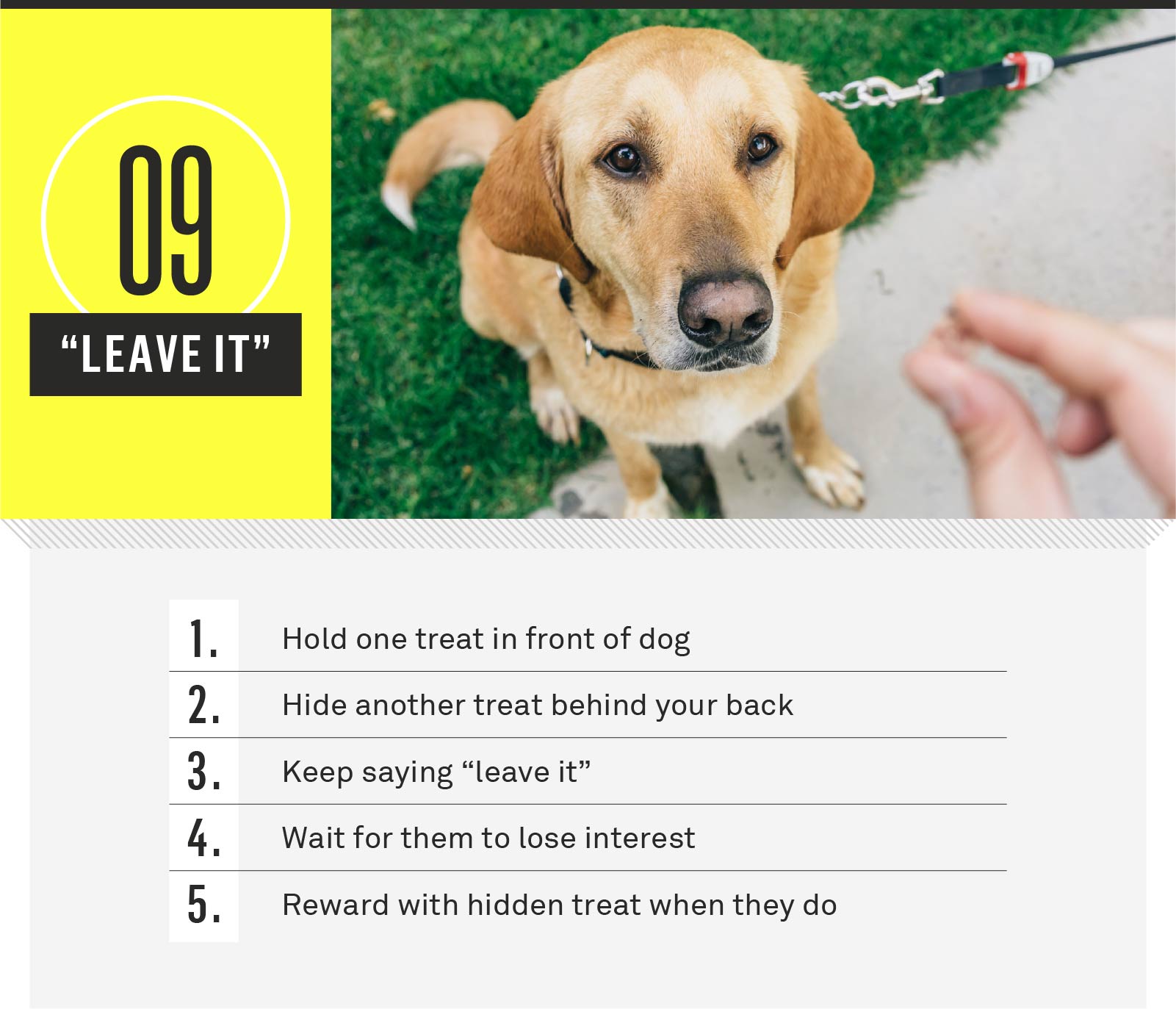
5. Leave It
“Leave it” is essential for safety, preventing your dog from picking up harmful objects. Show them a treat in your hand, say “leave it,” and reward them only when they stop trying to get it. This command is like training your dog to resist temptation, an invaluable skill.
6. Heel
Walking your dog can be a breeze with “heel.” This command keeps your dog walking beside you, not pulling ahead or lagging behind. Start with a treat by your side, and encourage your dog to follow. Imagine the pleasure of a peaceful walk, with your dog happily trotting by your side.
7. Off
“Off” is useful for teaching your dog not to jump on people or furniture. Use it when your dog jumps, and guide them to the ground. Reward them when all four paws are back on the floor. It’s about teaching your dog respect for boundaries, enhancing their social interactions. Which command do you think will be most useful for your dog? Each of these skills builds trust and strengthens your relationship, making everyday life smoother and more enjoyable. Try incorporating these commands into your routine and watch your dog’s transformation.

Credit: in.pinterest.com
Training Techniques
Training a dog involves patience and consistency. Understanding the right techniques is crucial. These techniques help build a strong bond between you and your pet. Let’s explore some effective training methods.
Consistency Is Key
Use the same words for each command. This helps the dog understand better. Practice regularly for better results.
Positive Reinforcement
Reward your dog with treats or praise. This encourages good behavior. Dogs respond well to positive feedback.
Short Training Sessions
Keep training sessions brief. Long sessions can tire your dog. Ten minutes is ideal for each session.
Clear Body Language
Use hand signals along with verbal commands. Dogs pay attention to body cues. Be clear and consistent.
Patience And Persistence
Training takes time. Be patient with your dog. Persistence leads to success in the long run.
Start With Simple Commands
Begin with basic commands like ‘sit’ and ‘stay’. Simple commands are easier to learn. Build up to more complex tasks.
Avoid Punishments
Punishments can create fear. Focus on encouraging good behavior. A calm approach works best.
Consistency And Patience
Training a dog demands consistency and patience. These are vital for success. Dogs thrive on routine and repetition. Without consistency, confusion sets in. Patience ensures a calm learning environment. It helps build a strong bond. The journey is rewarding and fulfilling.
Begin with simple commands. Repetition fosters understanding. Stick to a routine. Consistent commands yield better results. Reward good behavior immediately. Timely rewards reinforce learning.
Consistency In Command Words
Use the same words for each command. Dogs learn through repetition. Mixed words cause confusion. Stick to one word for each action. For example, use “sit” always to make the dog sit.
Consistency In Training Sessions
Train at the same time daily. Short, regular sessions work best. Consistent timing helps dogs anticipate training. It keeps them focused and engaged.
Patience With Progress
Dogs learn at their own pace. Patience is crucial. Celebrate small achievements. Each success builds confidence. Avoid frustration or anger. Positive reinforcement works wonders.
Patience In Repetition
Some commands take longer to learn. Repetition is key. Stay calm and persistent. Repeat commands until they become second nature. It takes time but is worth it.
Consistency In Environment
Train in a distraction-free space. Consistent environment aids focus. Gradually introduce distractions. This strengthens command adherence. Control the environment for optimal learning.
Patience With Mistakes
Mistakes happen. It’s part of learning. Correct gently and move on. Maintain a positive attitude. Patience leads to better results.
Consistency With Rewards
Immediate rewards reinforce behavior. Consistent rewards create a pattern. Dogs learn through positive feedback. Use treats, praise, or play. Consistency in rewards boosts training.
Credit: www.crala.org

Credit: www.reddit.com
Frequently Asked Questions
How Do I Start Training My Dog?
Begin with simple commands. Use treats as rewards. Keep sessions short and consistent for best results.
What Is The Most Important Command For Dogs?
The “sit” command is fundamental. It helps establish control. Essential for safety and discipline.
How Long Does Dog Training Take?
Training varies. Some dogs learn fast. Others need weeks. Patience and consistency are key.
Can Older Dogs Learn New Commands?
Yes, older dogs can learn. They might take longer. Use patience and positive reinforcement.
What Tools Help In Dog Training?
Use treats, clickers, or toys. Keep sessions fun. Consistent practice helps your dog learn quickly.
Conclusion
Training a dog involves simple and clear commands. These commands help build a strong bond. They also ensure your dog understands your expectations. Patience and consistency are key in training. Each command teaches important skills. Sit, stay, come, and others form the basics.
These commands make life easier for both you and your dog. Remember to praise your dog for good behavior. Your dog learns best in a positive environment. With time, your dog becomes a well-behaved companion. Enjoy the journey of teaching and learning.
It’s rewarding for both of you. Happy training!