
Last Updated on August 11, 2026 by Jake Barkley
Imagine having a loyal companion by your side, one that not only offers unconditional love but also assists you with daily tasks, making life a little easier. You’re probably wondering how long it takes to train such an incredible helper—a service dog.
The answer isn’t as straightforward as you might think. Training a service dog involves a blend of time, patience, and dedication, a process that can vary significantly depending on several factors. As you read on, you’ll discover what goes into this transformative journey, from the initial stages of training to the moment your dog becomes your indispensable ally.
Uncover the secrets behind the timeline and the steps involved in transforming a playful pup into a skilled service dog, and prepare to be fascinated by the dedication and expertise that goes into this life-changing process.

Credit: www.youtube.com
Training Timeline
The journey to train a service dog is a unique process. Each dog’s training timeline can vary. It depends on factors like breed, task complexity, and trainer experience. Understanding the phases of training helps set realistic expectations. Let’s dive into the key stages of a service dog’s training timeline.
Initial Assessment And Selection
The training process begins with selecting the right candidate. Trainers evaluate a dog’s temperament, health, and intelligence. Not every dog is suitable for service work. This assessment can take several weeks.
Basic Obedience Training
Basic obedience forms the foundation for all service dogs. Dogs learn commands like sit, stay, and come. This stage usually lasts three to four months. Consistent practice is essential for success.
Advanced Training
During advanced training, dogs learn specific tasks. These tasks depend on the handler’s needs. Training might include guiding, retrieving items, or alerting to sounds. Advanced training can take six months to a year.
Public Access Training
Service dogs must behave well in public settings. They learn to stay calm in crowded places. This stage is crucial for their future role. It often lasts several months.
Final Certification And Matching
After training, dogs must pass a certification test. This test evaluates their skills and behavior. Once certified, they are matched with their handler. The matching process ensures compatibility and success.
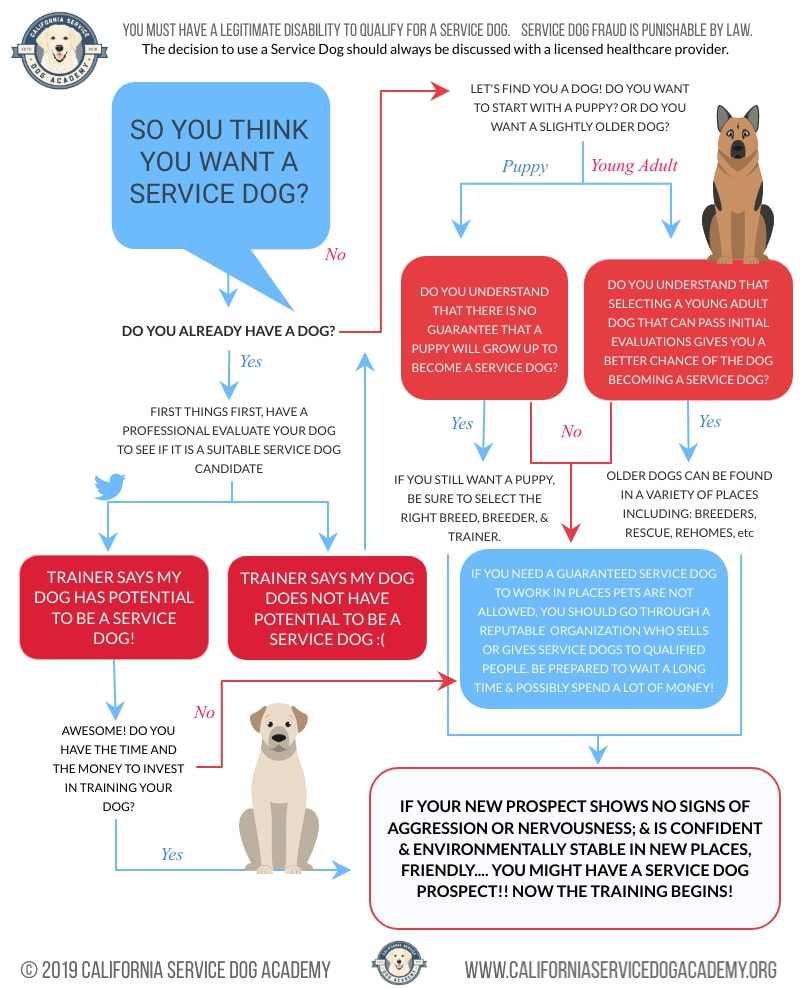
Credit: www.californiaservicedogacademy.org
Factors Influencing Duration
Training a service dog takes time, influenced by breed, the tasks it needs to learn, and the trainer’s expertise. Some dogs may require months, while others take years to fully prepare for service tasks. Patience and consistent practice are crucial to ensuring the dog is ready to assist effectively.
Training a service dog is a journey that requires patience and dedication. The time it takes can vary greatly. Several factors influence how long it takes to train a service dog, each playing a significant role in determining the duration. Understanding these factors is crucial for anyone considering training a service dog.
Breed And Temperament
Certain breeds are naturally more suited to service work. For instance, Labrador Retrievers and Golden Retrievers are popular choices due to their intelligence and calm demeanor. However, not every dog within these breeds will be suitable. A dog’s temperament is equally critical. Some dogs are naturally more anxious or easily distracted, which can extend the training period. Evaluating a dog’s temperament early on can save time and effort.
Training Methods
The choice of training method impacts the duration significantly. Positive reinforcement, which rewards the dog for good behavior, is widely used and effective. This method fosters a strong bond between the dog and handler. Consistency in training is vital. Daily practice and repetition help reinforce commands and behaviors. If you’re inconsistent, expect the training to take longer.
Trainer Experience
An experienced trainer can make a big difference in training time. They can quickly identify and correct issues, streamlining the process. If you’re training the dog yourself, consider seeking guidance from a professional. Would you trust an amateur to perform a complex surgery? The same logic applies here; expertise matters.
Specific Tasks Required
The complexity of tasks the dog needs to learn can extend training time. Simple tasks like fetching items may take less time than complex ones, like detecting low blood sugar levels in diabetic patients. List the tasks your dog needs to perform. This will help you estimate the training duration more accurately.
Consistency And Environment
Consistency in the environment plays a role too. Frequent changes in surroundings can confuse the dog, delaying progress. Ensure a stable training environment to help your dog focus and learn effectively.
Age And Health Of The Dog
Training a puppy is often faster, as they are more adaptable and eager to learn. However, older dogs with health issues may require more time. Consider the health and age of your dog before setting training expectations. Ultimately, patience and commitment are key. Each dog is unique, and understanding these factors will help you tailor your approach. Are you ready to embark on this rewarding journey with your future service dog?
Expert Techniques
Training a service dog typically takes 18 to 24 months. Puppies start with basic obedience, progressing to advanced tasks. Consistent practice and patience are essential for developing reliable service skills.
Training a service dog is no small feat. It involves a series of expert techniques that ensure a dog can effectively perform tasks for individuals with disabilities. While the process can be lengthy, understanding these techniques can provide insight into the precision and dedication required. It raises the question: what methods do experts use to transform a regular dog into a reliable service animal?
Positive Reinforcement
Positive reinforcement plays a crucial role in training service dogs. Trainers reward dogs with treats, praise, or playtime for good behavior. This method encourages the dog to repeat desired actions. Imagine teaching a dog to pick up items. When the dog successfully retrieves an object, it receives a reward. This positive association helps in reinforcing the action.
Consistency Is Key
Consistency in commands and routines is vital. It helps the dog understand what is expected. Using the same words and gestures every time prevents confusion. Consider the command for sitting. Always using the word “sit” with the same hand signal ensures clarity. This consistency speeds up the learning process.
Gradual Exposure To Real-life Scenarios
Service dogs need to perform tasks in various environments. Gradual exposure to different settings is essential. It prepares the dog to remain calm and focused amidst distractions. For instance, a dog might start training at home, then move to a quiet park, and eventually to a busy street. Each step builds the dog’s confidence and ability to manage real-world challenges.
Task-specific Training
Every service dog is trained for specific tasks based on the handler’s needs. This could range from opening doors to alerting for medical conditions. The focus is on mastering these specific skills. A dog trained to detect low blood sugar must learn to identify subtle changes in scent. This task-specific training is tailored to the handler’s unique requirements.
Socialization And Public Access Training
Service dogs must be comfortable in social settings. Socialization helps them remain composed around people and other animals. Public access training ensures they behave well in public spaces. Imagine a service dog accompanying its handler to a restaurant. It must remain calm under the table, ignoring food and other distractions. This training is critical for seamless integration into everyday life.
Patience And Adaptability
Training a service dog requires immense patience and adaptability. Each dog learns at its own pace. Adjusting techniques based on the dog’s progress is necessary. If a dog struggles with a task, trainers might try different approaches. This flexibility helps in overcoming training hurdles efficiently. — These expert techniques showcase the dedication needed to train a service dog. Understanding these methods can inspire appreciation for the hard work behind these incredible animals. Have you ever wondered what it would be like to experience such a transformative journey?
Credit: www.supportdogcertification.org
Frequently Asked Questions
How Long Does Service Dog Training Usually Take?
Service dog training typically takes 1 to 2 years. It depends on the dog’s skills and needs.
What Factors Affect Service Dog Training Duration?
Training duration depends on breed, temperament, tasks, and trainer’s experience. Every dog learns differently.
Can Older Dogs Be Trained As Service Dogs?
Yes, older dogs can be trained. Age isn’t a barrier, but adaptability and health matter.
What Is The First Step In Training A Service Dog?
Basic obedience training is the first step. It builds a strong foundation for specialized tasks.
How Do Trainers Assess Service Dog Readiness?
Trainers evaluate behavior, task performance, and adaptability. Consistent success in real-world scenarios is key.
Conclusion
Training a service dog takes time. Each dog learns at its own pace. Some dogs take months; others need years. Patience and consistency are key. Regular practice helps dogs learn faster. Building trust is crucial. Trainers must be attentive to each dog’s needs.
Celebrate small successes. Every step counts in the process. Proper training builds confidence in dogs. A well-trained service dog improves lives. Their support is invaluable. Keep realistic expectations. Training is a journey, not a race. Remember, every dog is unique.
Your dedication makes a big difference.